


Emilio Paolucci, Paolo Neirotti
New trends in production
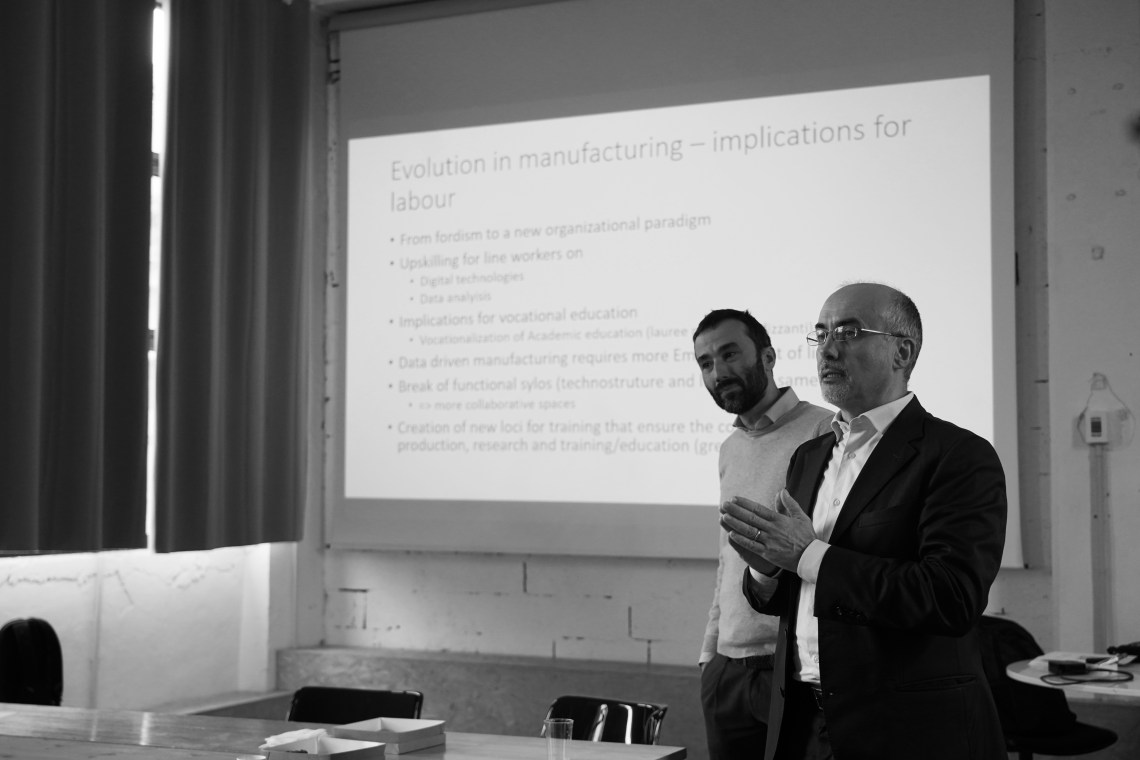
abstract: The talk with Paolo Neirotti will discuss modern manufacturing in the age of digital transformations: lights and shadows around the manufacturing ecosystem in Turin.
Here you can find some slides prepared by the professors for you.
/////////////////////////////////////////////////////////////
Cristina Bianchetti, Luis Martin, Eloy LLevant Soy
Territory & Production
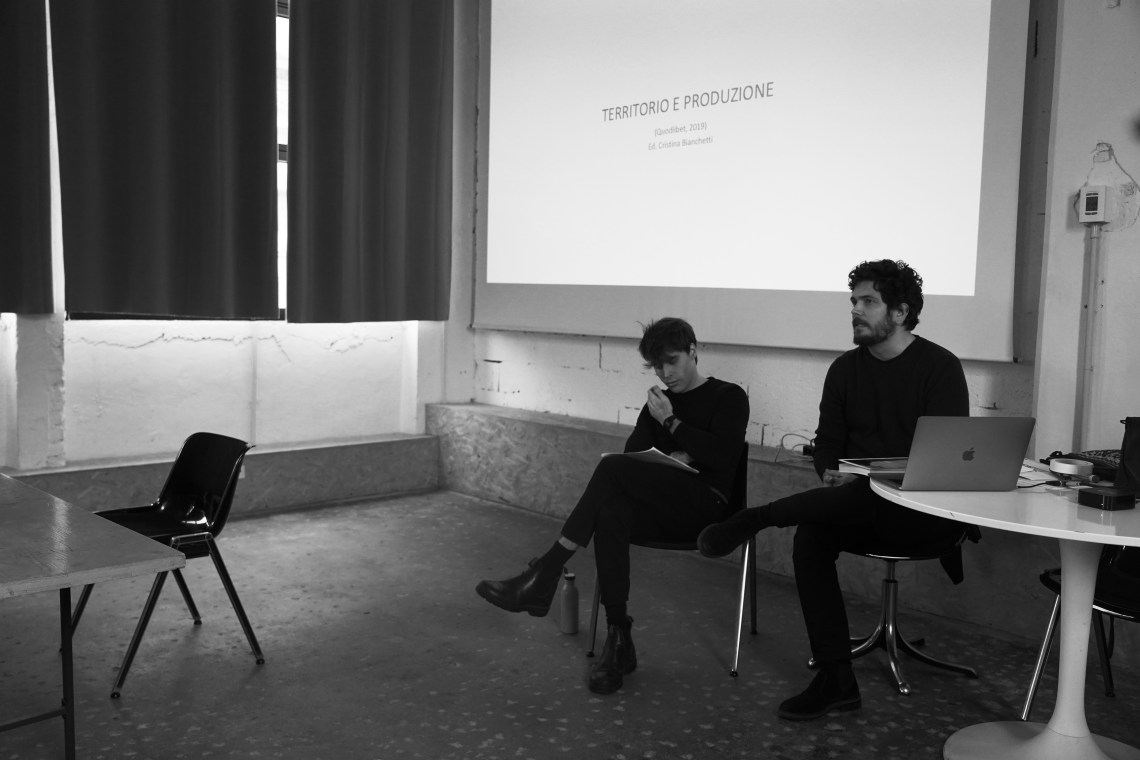
abstract: In the eld of urban studies and territorial policies, a strong interest is returning to the dynamics and issues related to production. A renewed attention very varied and linked to very di‑erent contexts but united by an open meaning of the term “production”, which brings it back to the ways in which a given territory can become more fertile, fruitful, rich and creative. The research we are conducting, deposited for example in the book “Territory and Production” and in a forthcoming volume on Turin, seek to capture the changing relationship between production and territory in an e‑ort to broaden the focus on multiple connections between space, economy and society. How is the production studied? Which points of observation, which concepts, which cognitive maps, which themes play a predominant role in the construction of reality today? What scenarios does production build, what processes and what spatial implications? The research on Turin explore the legacy of the Fordist city, of Fiat’s one-company-town, in a time marked by severe crises and a radical change in urban policies and agendas. Turin responds to the deindustrialisation process by diversifying its economic base, relaunching tourism, cultural production, the knowledge economy and the university system. The research investigates its being an industrial city in a post-industrial society. No longer a Fordist and vertical city centered around Fiat but a city with a more diversied industrial system linked above all to the presence of medium-sized companies that are champions of niche and luxury markets. Enterprises strongly linked to the economy of services, research and quality logistics. These new forms of production build a dierent productive city, more horizontal but also more fragmented. The spaces of production take refuge in domesticity in the absence of a great shared narrative. Spaces enriched by the mixité (of functions and typologies) in a context in which the production of goods cannot be separated from other economies. Thus, the new industry builds a dierent Turin and with it the redenition of the contract between production and city. In the eld of urban studies and territorial policies, a strong interest is returning to the dynamics and issues related to production. A renewed attention very varied and linked to very dierent contexts but united by an open meaning of the term “production”, which brings it back to the ways in which a given territory can become more fertile, fruitful, rich and creative. The research we are conducting, deposited for example in the book “Territory and Production” and in a forthcoming volume on Turin, seek to capture the changing relationship between production and territory in an e‑ort to broaden the focus on multiple connections between space, economy and society. How is the production studied? Which points of observation, which concepts, which cognitive maps, which themes play a predominant role in the construction of reality today? What scenarios does production build, what processes and what spatial implications? The research on Turin explore the legacy of the Fordist city, of Fiat’s one-company-town, in a time marked by severe crises and a radical change in urban policies and agendas. Turin responds to the deindustrialisation process by diversifying its economic base, relaunching tourism, cultural production, the knowledge economy and the university system. The research investigates its being an industrial city in a post-industrial society. No longer a Fordist and vertical city centered around Fiat but a city with a more diversied industrial system linked above all to the presence of medium-sized companies that are champions of niche and luxury markets. Enterprises strongly linked to the economy of services, research and quality logistics. These new forms of production build a di‑erent productive city, more horizontal but also more fragmented. The spaces of production take refuge in domesticity in the absence of a great shared narrative. Spaces enriched by the mixité (of functions and typologies) in a context in which the production of goods cannot be separated from other economies. Thus, the new industry builds a di‑erent Turin and with it the redenition of the contract between production and city.
Here you can find their presentation.
/////////////////////////////////////////////////////////////
Marianna Nigra, Daniele Campobenedetto, Caterina Barioglio, Lucia Baima
The rules of production in the city
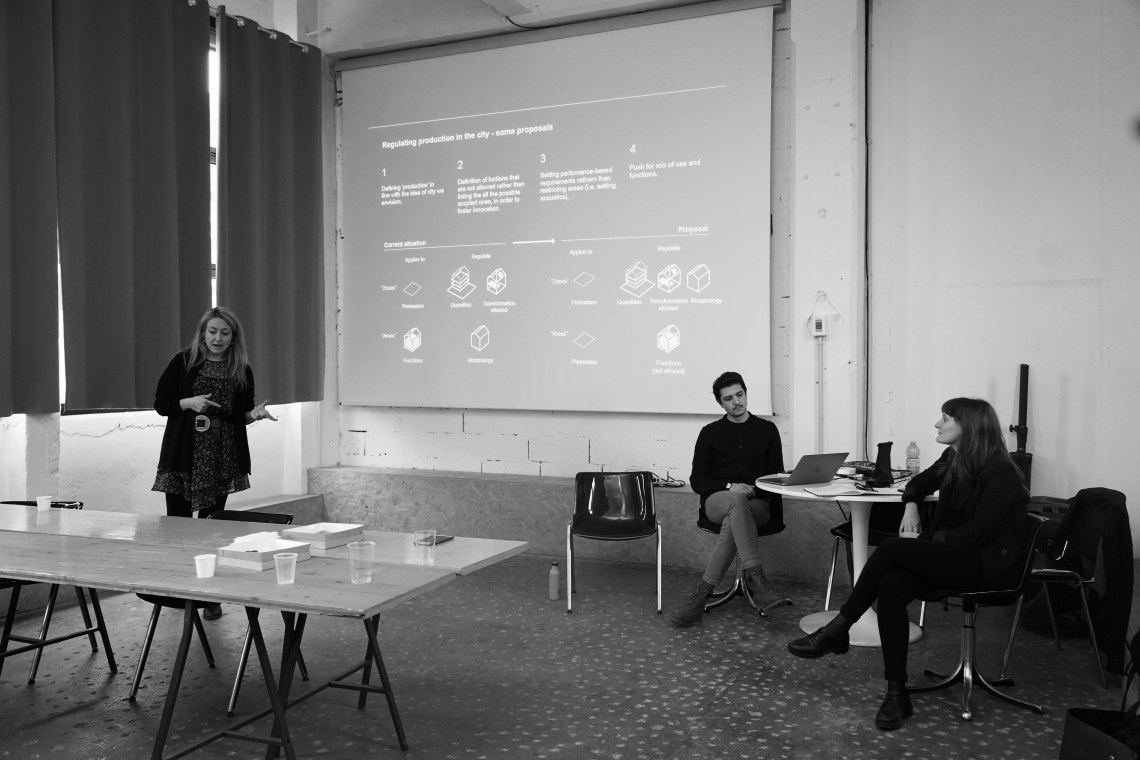
abstract: The relation between rules and city morphology traces back its roots in the past. Relevant examples in the history of our cities show that a fine relation between the socio-economic emergence of changes and rules has played a crucial role in shaping cities. Either by complying with the rules or pushing their boundaries, the role of rules can be the one of endorsing changes and city transformations. In exploring such dynamics, the role of rules in facilitating the return of production to our cities is discussed and reviewed in the context of zoning and coding in Turin, Italy.
Here you can find their presentation.
/////////////////////////////////////////////////////////////
Giulia Sammartano, Emilio Abbate
Geo-spatial 3D database for urban legacies
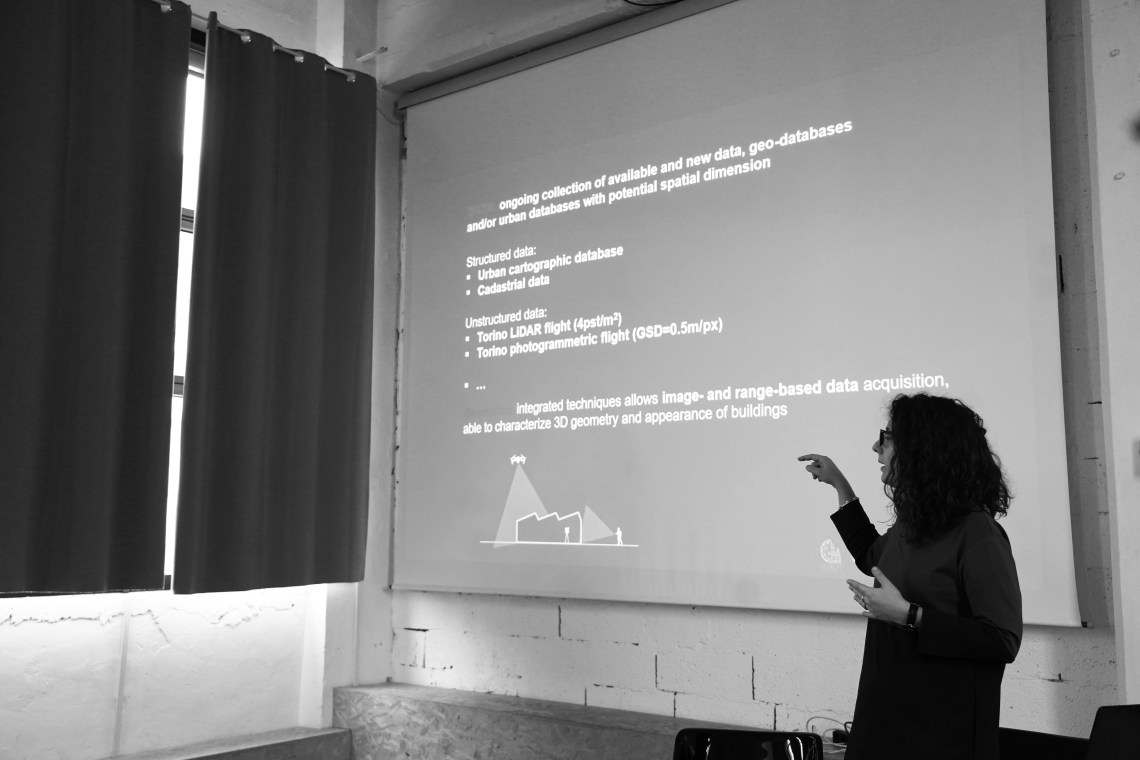
abstract: Geo-spatial information availability allows multi-layered analyses, monitoring and planning approaches at urban- and building-scale supporting interdisciplinary strategies focused on existing legacies for future cities. The accessibility to urban and regional spatial data infrastructures relates to georeferenced cartographic databases, is typically based on more traditional GIS approaches to the analysis. In parallel, the 3D modelling of the existing buildings and complex legacies for specific morphological analysis, urban planning and design practices is supported by the chance to integrate and update existing databases with digital metric data with multi-sensor approaches and advanced techniques by terrestrial and aerial acquisitions (LiDAR, aerial and UAV photogrammetry, portable mobile mapping system or by cars). Moreover, the new conception of 3D city models – 3D GIS allow spatial correlation not only for numerical cartography in a consolidated 2-Dimension (or a so-called 2.5D) but also multi-dimensional thematic data targeted on phenomena analysis. They pursue real 3D modeling with the crucial Z dimension assigned to data (es. floors information), and they look for a controlled management of urban complexity in the form of spatial contents, as complex geo-referenced and multi-temporal 3D information. In this sense, the correlation of the geometric and the semantic data is able to provide a digital tool which represent the 3D urban space, enhancing the aptitude to understand the city, its object, its networks and phenomena, through geo-spatial data modelling.
The digital twin project tries to provide a solution by a platform in the form of 3D geo-database suitable for hosting complex and interconnected thematic data (about built heritage, energy consumption, acoustics studies, traffic analysis, urban coding, planning rules, etc.). It could be able to: hypothesize and design a model of the relationship between urban objects and phenomena; to help the localization and representation of problems and foreshadowing possible solutions; to simulate the city in the 4th dimension, both in past and forecasting the possible future scenarios.
In the school design area in Torino, the aim of geo-spatial data contribution is to benefit from cartographic databases and the availability of a Lidar flight of the Torino municipality (resolution 4pts/m2) dated back at 2018 to analyses the geometry supporting investigation of urban-scale morphology, and to base the planning and design process.
Here you can find their presentation.
/////////////////////////////////////////////////////////////
Emanuele Protti
From legacy to the future: design competitions for industrial re-use
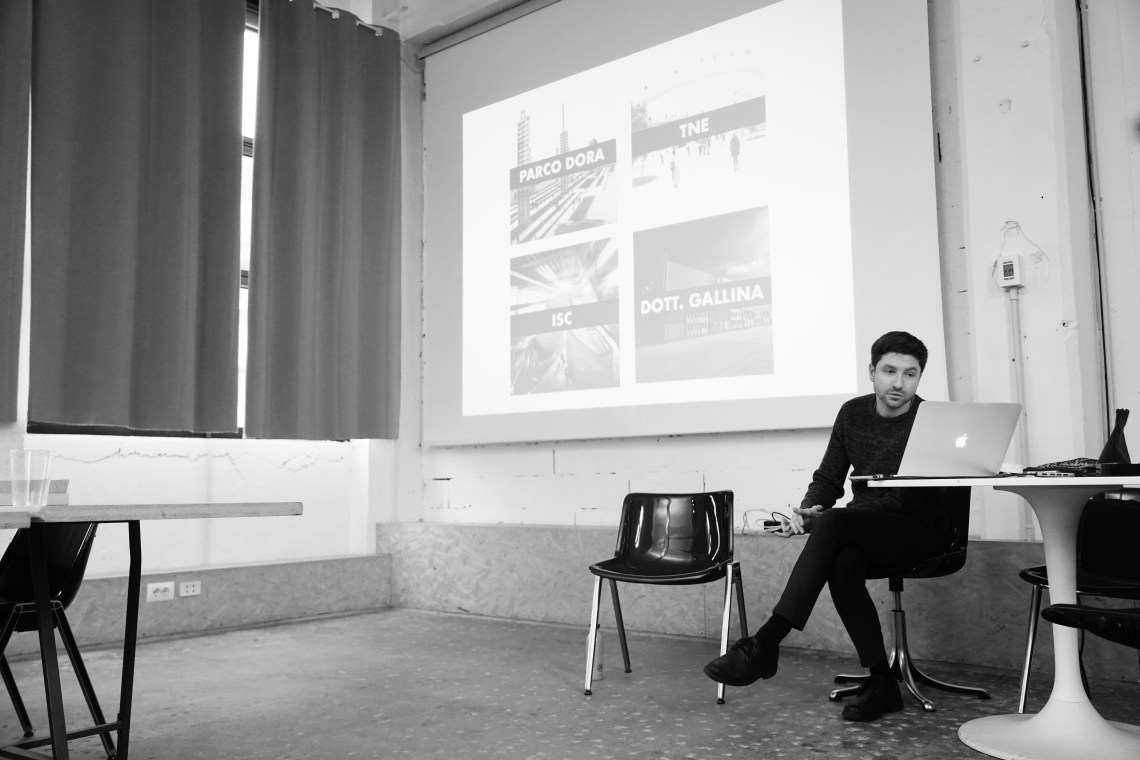
abstract: Turin is characterized by a strong commitment to industrial activities and production, maintaining a strong legacy with its industrial fabric. Through the presentation of four competitions related to industrial reuse, the short presentation aims to underline the changing request and strategy about factory buildings.
Here you can find his presentation.
/////////////////////////////////////////////////////////////
Maicol Negrello
Green deal: Agriculture as urban production
abstract: Agriculture has traditionally been considered a rural activity. However, the increasing food demands and climate changes’ impacts on crops and the environment, have pushed to think about new production strategies in the metropolitan area.
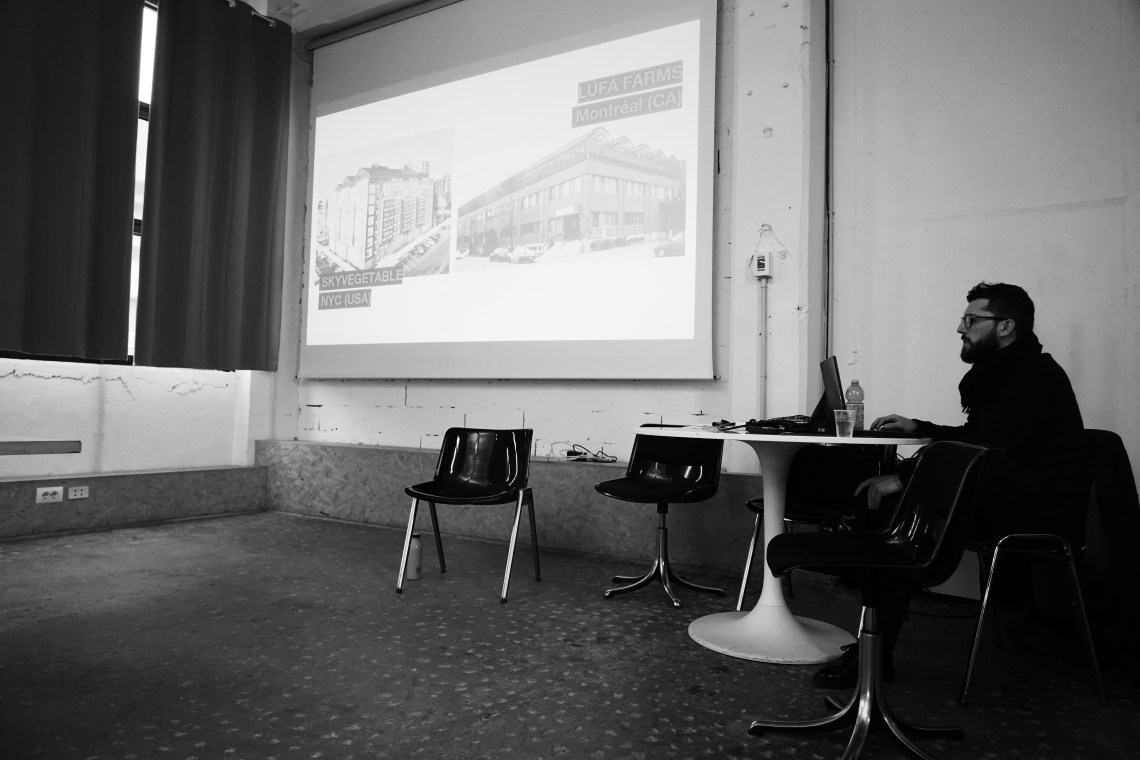
In Turin, both in the past and nowadays, we have experienced urban agriculture with aspects mainly related to not – profitable activities (or in critical situations). Starting from what is and where urban agriculture locates, the potential for this urban activity can be analyzed through some local and international case studies.
Today, thanks to technology, such as hydroponics and LEDs, it has been possible to create new indoor cultivation systems. This indoor production exploits the existing architecture – even in conditions of no sun- to create real urban farms, which are integrated into terms of architecture, energy flows and functional mix (different productions).
The growing interest in this sector has led many start-ups to turn into real urban farms with futuristic characteristics. Not only for the technologies adopted but also for the methods of relations and marketing.
Can this be applicable to all our cities?
Here you can find his presentation.
/////////////////////////////////////////////////////////////
Lucia Baima, Carlo Deregibus
The new manufactoring technology and Competence Center of Turin
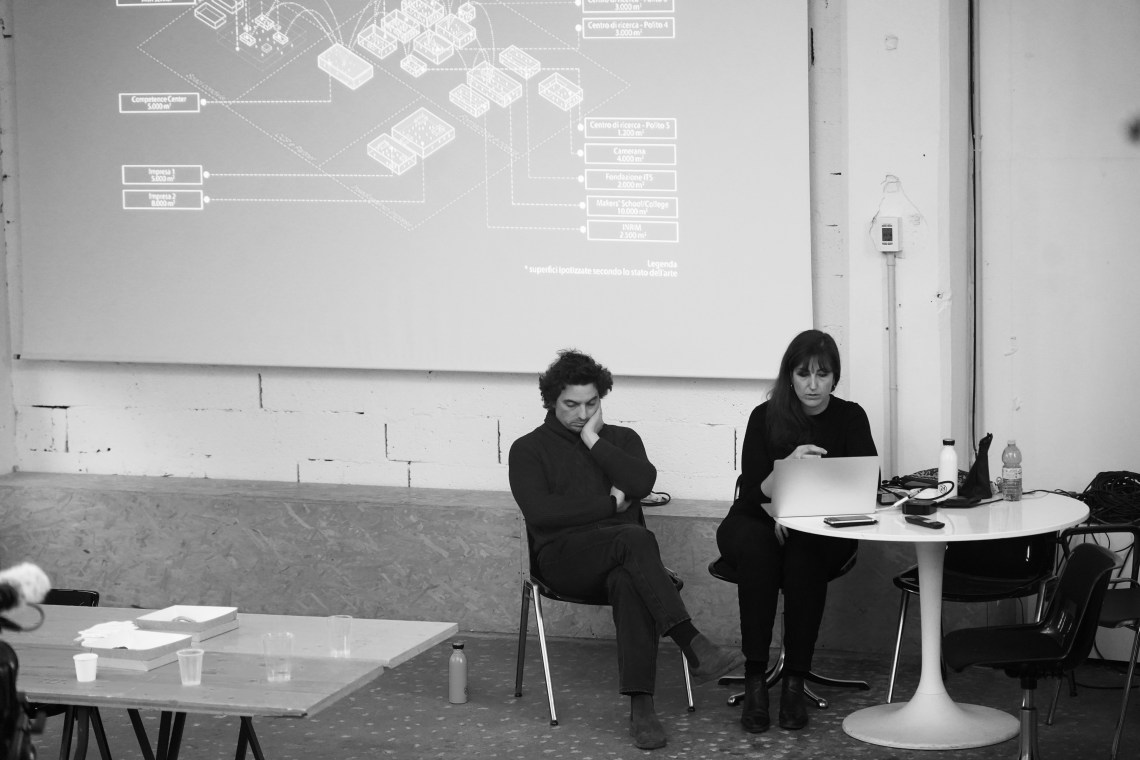
abstract: The presentation is about the design process of the MTCC – Manufacturing Technology and Competence Center. MTCC is a spatial platform where companies and research and training centers operate in continuous interaction with each other and with the local authorities, university, an institution.
Here you can find their presentation.
 INDUSTRIAL REMIX